Haunted Shakespeare
At-risk students discover the key to the Shakespeare Authorship Question

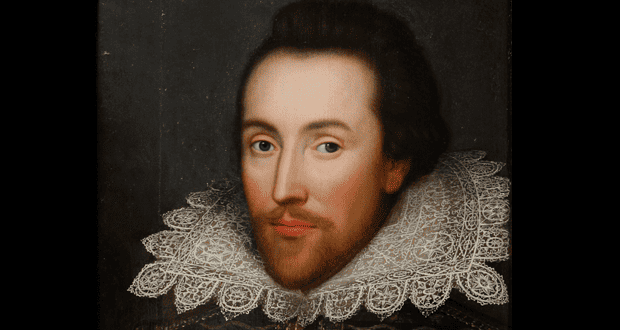
I returned to college when my first child was three, got a Bachelor’s in English and landed a job in a rural school. This was the kind of place where you could watch the fog over foothills and ask yourself daily if you might be crazy for choosing the profession. We had drama, fights, poverty, teenage awkwardness and emotional outbursts. In other words, we had what I would call normal problems. However, the old school had burned down, and the fire took every copy of Hamlet and Macbeth, the poems of Emily Dickinson and T.S. Eliot, and so forth. Every textbook turned to ash. I rescued a 12th grade lit text from the dumpster and taught Macbeth with copies I made illegally (for which I was chastised later) and a piece of chalk.
Soon, I made the move to an urban school. Foothills, gone. Sanity even more in question. At least I have all the advantages now, I thought. Back teaching twelfth-grade lit, I had plenty of textbooks, support materials, and lots of editorial speculation on the life of William Shakespeare as a young man in Stratford-Upon-Avon. Will Shakespeare was a farmer and a poet; the textbook introduction to the plays said so.
I had gone from teaching poet-farmers to navigating the crowded hallways of the urban school where gang violence became so routine that my veteran mentor, Nancy, ordered me permanently taken off hall duty once she learned I was pregnant. I miscarried that child, returned to hall duty, and inherited a new class.
This was a tiny group, just eight kids — half were felons and the others went through pre-trial diversion for their first offense to avoid doing time. In the hallway, I could see that Nancy was clearly worried about me.
“What are you gonna do? What will you teach?”
I didn’t hesitate. “I’m just gonna teach the Shakespeare canon. Like, all year.”
“That’ll work,” she said.
I had just discovered the Shakespeare authorship question — the academic argument that the farmer from Stratford didn’t write the 37 plays, the sonnets, or the epic poetry attributed to him. When I first heard the proposition, I was in a tiny teacher’s lounge carved out of a book storage room where eight of us kept coffee going and ate lunch — when we had time. I remember that I defended the man from Stratford that day. After all, I was raised on a farm; the first students I taught lived in those misty hills. The country was founded by farmer-poets, I proclaimed, thinking to myself, This is an elitist argument.
But I never stopped to think that farmer-poets, even in the tiny gossip-ridden town where I started my so-called career, were born into literacy. Until the last ten years, students in America have reaped the benefits of a classical education. Oedipus the King; Plato’s Republic; the works of Shakespeare himself. That would not have been true in the sixteenth century when Will Shaksper was chasing sheep. Also, so many of the source materials, everything from Ovid’s Metamorphosis to Italian novels left untranslated for decades, were supposedly lying around on end tables everywhere, fair game for our country “Shakespeare” to wield into the greatest body of work in English literature.
I started asking questions. Where would the glove-maker’s son, the sheepherder himself, have come into contact with classical works? More to the point, how would he have read them in their original tongue, let alone understood the complexities of the storylines to retell the ancient stories for the stage?
All stories are personal, first. They come from the weight of conflict and loss, “the pangs of dispriz’d love,” as Hamlet put it, not to mention “the slings and arrows of outrageous fortune.” We tackled Hamlet. We pushed the chairs out of the way. We enacted the play. The Crips and the Bloods traded lines. We read together Hamlet’s speech after the wedding reception. His mother already had a boyfriend, one astute girl observed.
“Cheating on Hamlet’s dad with the uncle,” she added.
“That went hard with the man,” one of my male students said.
A girl, quiet until now, observed, “She’s fast. Hamlet said she ran right to his uncle’s bed. ‘To post with such dexterity to incestuous sheets.’”
“What does dexterity mean?” A boy sporting blue colors asked.
“Skill,” I replied.
An expletive. “Then she’s done it before.”
Fortunately, the class ended. If the principal had walked in, I probably would have lost my job by the time the bell rang. But that brings up another point. I couldn’t have found ten people in the whole building who had read the entire play or had experienced the depth of emotional angst, the losses, and the skewering of the establishment on every page. How, then, could those of us entrusted with the Shakespeare legacy make sense of the deeply personal pain of the plays without demanding a flesh-and-bone writer to guide us? And what of the baseless biographical introductions to the plays in any twelfth-grade textbook with claims of a genius sixth-grade education and expert use of classical sources, not to mention an ease of intimacy with dozens of foreign countries, specifically the Italian cities in which so many of the plays were based? And all of this talent allegedly showed up in London in the early 1590’s when we know that “A Historie of Error” was put on in 1577 at Blackfriar’s Theatre — while Wil Shaksper, a fifteen-year-old, was still herding sheep in Stratford.
Next in the lineup was Othello, and this is where a group of newly baptized Shakespeare scholars, nearly all Black students, broke me of ever again defending Wil Shaksper of Stratford.
First, the students were amazed that the main character was Black.
“But how?” A boy sporting spotless red and white athletic shoes asked. “In the Sixteenth Century? You put a Black man as the main character and name the play after him? How is that possible?
A student sporting a blue Patriots football jersey sat back and folded his arms. “They ain’t no way. Ain’t no way a guy who never left England ran into a Black man and decided to build a whole play around him.”
One of the girls said, “Where would he have run into racism? The kind of slurs Iago dishin’ out about Othello. Where would he even hear that?
The student sporting blue said, “That ain’t the point. People probably thought those things about Blacks, mainly ‘cause they never met anybody from Africa. But my thing is that the writer here sets up a Black man in the highest military position and all the whites are jealous. And they all out to get him. And that is so real. How did some guy from an isolated all-white town even come up with this?”
The girl said, “A Black man marrying a white girl would never happen in England. So, where did the writer live where he would have seen such a thing?”
Another student said, “It’s set in Italy. Italy and Spain are closer to Africa. Maybe there.”
“But Shakespeare never went there,” the boy in blue reminded us.
There was something deeper going on with these students and with me. Where was the “Soul of the Age,” “This Star of England,” the one Ben Jonson compared to Aeschylus? In Stratford Will we had a “strawman,” prolific in evictions and litigation against tenants, whose last will and testament boasted of not a single manuscript nor a shred of parchment preserving a few lines of a Shakespeare play. Beyond this, I told the students, the man from Stratford owned not so much as a Geneva Bible, let alone the works of the classics the academics want us to believe the farmer’s kid used to conjure the plays.
A middle-class merchant or land-poor farmer wouldn’t have had knowledge of these works. The Tudor dynasty was split under Henry VIII, the children suffering a divide that ripped the country apart. “Bloody” Mary Tudor, a Catholic, burned 282 people at the stake for translating, printing, and attempting to distribute all or part of the Bible. But the biggest threat to the religious establishment was the Protestant movement born out of a break with both Catholic and Anglican religious dogma. Much of the speeches and protests started as they usually do — on college campuses such as Cambridge.
By the time the Shakespeare plays were written, the Puritans had gained a foothold in Elizabeth’s regime. Whoever Shakespeare was, when he took the stage, he was up against powerful forces suspicious of classical education, opposing The Renaissance in particular and “secular” plays in general. By the time Will Shaksper rolled into London, in the 1590’s, the Puritans were already using the plague as an excuse to close down theatres unsanctioned by the crown. In other words, the curtain was already coming down. People close to the plays were tortured and killed. Laws passed in Parliament made the monarchy a clearing house, determining what was published and what was not. This helps explain why the First Folio wasn’t printed and distributed until 1623 when James I had been on the throne for just over 20 years. By then, the Queen’s official playwright, Edward de Vere, and Stratford Will were both dead.
The “Soul of the Age” had to be an individual willing to sacrifice everything to bring his plays to the stage, including his very identity. After I left the classroom and the bright, young voices who first questioned the status quo were in their late twenties, I discovered an academic movement proposing the idea of a nobleman, the “chief courtier” of Queen Elizabeth, Edward de Vere, as the real Shakespeare. Holding the title Lord Great Chamberlain, he was known in his time as “Oxford.” Edward de Vere was second in the realm; inheriting the title of Master of Revels, he held membership in the House of Lords, preceding Elizabeth into Parliament while holding the ceremonial scepter.
The first ward of Elizabeth’s court, Oxford suffered the theft of his deceased father’s lands. Oxford was educated by Cambridge tutors. He had the most expansive libraries in England from which an unmatched “self-education” was not only possible but well documented — this “wounded name,” this soul searching for his place, seems more the spirit of his time. Comparing his life to the plays, it’s easy to make the case that Oxford wrote autobiographically of his own disenfranchisement, his “loss of good name,” and his dual nature.
His feeling that he was a unicorn, a stranger in his own life — a royal unable to take credit for the works of genius he created — gives us a glimpse of the soul of the poet. He wrote out of his own pain. Without conflict, there is no drama, and without pain, there is no story. The students I taught were labeled “at-risk.” They found redemption in Shakespeare’s plays, seeing themselves in Hamlet’s desperate search for his place and the marginalization of Othello. The plays are the evidence. “The Strawman” of Stratford has no soul. Our best hope of finding Shakespeare is to look at the one who was Hamlet, the royal under siege who ran to the Continent, banished from court and imprisoned in the Tower of London, emerging to write the greatest tragedies in the English language.
The writer of the dedication to Castiglione’s Book of the Courtier and patron of poets, Oxford’s name was great by heritage. Sanctioned, and at times censored, he populated the plays with disenfranchised people, cathartically working out his true identity.
This manifestation of a flesh-and-bone Shakespeare came to my classroom when children in pain recognized a fellow traveler. It came because we exalted classical learning over curriculum dogma and robotic formula. The students saw themselves in the plays, and that speaks of a writer who suffered. I learned this from my students: It is a haunted Shakespeare we seek, a man whose pain “lives behind” the “wounded name” still in the shadows, waiting to be discovered on the page and the stages where his works still resonate over four-hundred years later.
For more on the Shakespeare authorship question, check out:
https://edevere17.com/
https://hankwhittemore.com/
https://shakespeareoxfordfellowship.org/
https://deveresociety.co.uk/
https://politicworm.com/